
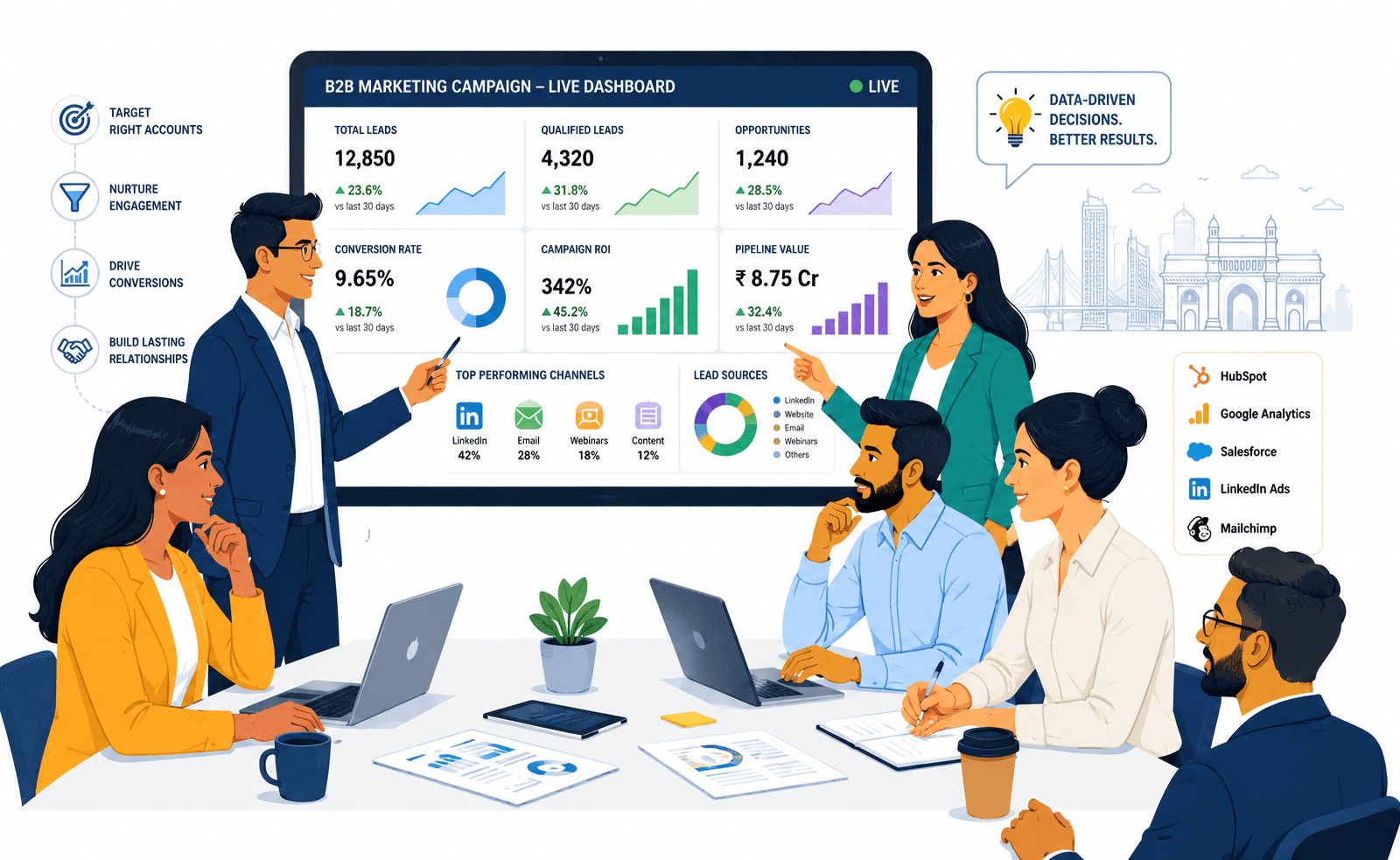
As we navigate 2026, the pressure on B2B marketers to deliver real results is more intense than ever. Founders are grappling with the challenge of standing out in an increasingly crowded marketplace. Recent discussions reveal a tension between adopting the latest trends and truly connecting with customers. The need for effective, outcome-driven strategies has never been clearer.
Get a realistic roadmap to boost your B2B marketing efforts today.
Understanding Your Audience for Real Growth
Many founders today find themselves overwhelmed by the sheer volume of marketing strategies available. The industry consensus suggests that without a deep understanding of your audience, even the most sophisticated tactics can fall flat. Generic messaging simply won’t resonate; you risk alienating potential clients who are looking for personalized solutions tailored to their unique challenges. What’s changing is an increased focus on genuine customer insights. Companies that prioritize understanding their customers’ pain points and motivations are seeing more meaningful engagement. This shift towards empathy and personalization means that your marketing efforts can move from a one-size-fits-all approach to a more nuanced strategy that speaks directly to your target audience’s needs. The business implications are profound. By investing time in understanding your audience, you’re not just improving your messaging; you’re also building stronger relationships. Founders who adopt this approach are likely to see enhanced customer loyalty, increased trust, and ultimately, sustainable growth.
Harnessing the Power of Direct Mail in Digital Age
In a world where digital marketing dominates, it’s easy to overlook traditional methods like direct mail. However, recent discussions highlight a resurgence in direct mail marketing as a powerful tool for B2B engagement. With inboxes flooded and attention spans dwindling, tangible mail can cut through the noise and create a memorable impact. Many founders report that well-crafted direct mail campaigns can create a personal touch that digital communication often lacks. The key to successfully leveraging direct mail lies in personalization and strategic targeting. When you craft a direct mail piece that speaks directly to the recipient's needs, it becomes more than just a marketing effort; it transforms into a conversation starter. This approach can lead to higher response rates and engagement, as recipients appreciate the thoughtfulness behind the communication. From a business outcome perspective, integrating direct mail into your marketing mix can enhance your overall strategy. Companies that adopt this hybrid approach often see improved lead generation and a greater ability to nurture prospects through the sales funnel. As a founder, this means not only increasing your outreach but also enhancing your conversion potential, leading to a stronger bottom line.
Social Media: More Than Just a Buzzword
For many B2B companies, social media remains a perplexing landscape. Founders often struggle with how to effectively utilize platforms like LinkedIn or Twitter to engage with their audience. The industry consensus suggests that social media is not just a place for brand awareness; it’s a vital tool for building relationships and driving conversions. The challenge lies in transitioning from merely posting updates to creating meaningful interactions that resonate with your audience. The landscape is evolving, and forward-thinking companies are finding innovative ways to use social media for targeted campaigns and community engagement. By focusing on creating valuable content that addresses the specific pain points of your audience, you can establish your brand as a thought leader in your industry. Engaging in dialogues, responding to comments, and sharing insights can humanize your brand and foster a sense of community. This shift in strategy can have significant business implications. Companies that actively engage on social media often experience increased brand loyalty and customer retention. For founders, this means not just reaching potential customers but also nurturing relationships that can lead to long-term partnerships and sustained growth.
The Role of Content Marketing in B2B Success
Content marketing has emerged as a cornerstone of successful B2B strategies. However, many founders find themselves overwhelmed by the need to continually produce high-quality content that genuinely adds value. The reality is that effective content marketing goes beyond just creating articles or white papers; it’s about delivering insights that resonate with your audience and address their core challenges. As businesses increasingly focus on providing value through educational content, the emphasis has shifted from quantity to quality. Companies that focus on creating in-depth, actionable content that speaks directly to their audience’s needs are seeing higher levels of engagement and trust. This approach not only positions your brand as an authority in your field but also encourages prospects to view you as a partner in their growth journey. The implications for your business are clear: a robust content marketing strategy can drive traffic, generate leads, and ultimately convert prospects into loyal customers. By dedicating resources to content that truly serves your audience, you’re not just building a library of materials; you’re cultivating a reputation that can significantly enhance your market position.
Aligning Sales and Marketing for Greater Impact
One of the most common struggles in B2B companies is the disconnect between sales and marketing teams. Founders often face challenges in ensuring that both departments are aligned toward a common goal. The industry consensus suggests that when sales and marketing work closely together, the results can be transformative. A synchronized approach allows for more cohesive messaging and a unified strategy that resonates with prospects at every stage of the buyer's journey. The changes in this area are focused on fostering collaboration and communication between teams. By implementing shared goals and regular check-ins, businesses can create an environment where insights are shared, and strategies are adapted based on real-time feedback. This alignment not only enhances the efficiency of marketing campaigns but also empowers sales teams with the support they need to close deals effectively. For founders, the impact of aligning sales and marketing is substantial. Companies that successfully integrate these functions often report improved lead quality, higher conversion rates, and ultimately, a stronger revenue stream. By breaking down silos, you’re not just streamlining operations; you’re creating a more agile organization that can respond swiftly to market demands.
Embracing Data-Driven Decision Making
As the B2B landscape becomes increasingly competitive, the importance of data-driven decision-making cannot be overstated. Founders often grapple with how to effectively utilize data to inform their marketing strategies. The truth is that leveraging data can provide invaluable insights into customer behavior, preferences, and trends. Companies that embrace this approach are better positioned to make informed decisions that drive growth. The evolution here is towards a more analytical mindset, where companies are not just collecting data but actively using it to shape their strategies. This means investing in tools and technologies that allow for real-time analytics, enabling teams to track performance and adapt their tactics accordingly. By harnessing data, businesses can uncover opportunities for optimization and innovation in their marketing efforts. The business implications are significant. Founders who prioritize data-driven strategies often see improved ROI on their marketing spend and a greater ability to pinpoint areas for growth. By making decisions grounded in real insights, you’re not just reacting to trends; you’re proactively steering your company toward sustained success.
What This Looks Like in Practice
Consider a mid-sized SaaS company struggling to generate leads through traditional channels. They began to invest in personalized direct mail campaigns, targeting decision-makers with tailored messaging. This pivot not only increased their response rates but also led to a significant uptick in scheduled meetings and conversions, ultimately transforming their lead generation strategy.
Get a realistic roadmap to boost your B2B marketing efforts today.
The Transformation
Before this transformation, many founders felt lost in a sea of generic marketing tactics that failed to resonate with their target audience. After embracing personalized strategies, they witnessed a shift in their engagement levels, moving from frustration to a newfound confidence in their marketing approach, complete with stronger relationships and a more robust pipeline.
Frequently Asked Questions
What are the most common B2B marketing strategies?
Common B2B marketing strategies include content marketing, social media engagement, email marketing, and direct mail. Each approach serves to connect with potential clients and build relationships.
What is the cost or timeline for implementing these strategies?
Costs can vary widely based on the strategy and scope. For example, a content marketing campaign might range from ₹2,00,000 to ₹30,00,000 depending on the complexity and resources required.
What are the risks associated with B2B marketing?
The primary risks include misalignment between sales and marketing, investing in ineffective channels, or failing to understand the target audience. However, with a strategic approach, these risks can be mitigated.
How does this compare to B2C marketing?
B2B marketing typically focuses on relationship building and long sales cycles, while B2C is often more transactional. Understanding these differences is key to tailoring your strategies effectively.
How can I get started with B2B marketing?
Start by defining your target audience and understanding their needs. From there, develop a multi-channel strategy that includes content, social media, and direct outreach.
Conclusion
The next 12 months present a pivotal opportunity for B2B companies that embrace these strategies. Businesses that act now can build stronger connections, enhance their brand reputation, and drive sustainable growth. Meanwhile, those who hesitate may find themselves struggling to keep up in an increasingly competitive landscape.