
Every founder faces two major constraints: time and money. When building an MVP, these two determine how fast you can validate your idea, enter the market, and show early traction. The faster you build, the faster you learn — and the less you spend. This is where automation becomes the strongest advantage for modern startups.
Automation doesn’t just speed up development; it creates a predictable, efficient cycle that reduces manual work, minimizes mistakes, and accelerates your path to launch. At KSoft, we’ve seen automation transform how startups build MVPs across SaaS, fintech, ecommerce, and AI-driven products. With the right mix of tools and strategy, founders experience faster delivery, lower costs, and higher-quality releases.
This 1000-word guide explains how automation drives speed, why it lowers development costs, and how teams like ours — offering MVP Development Services, MVP Developer expertise, Lean MVP Developer workflows, MVP Consultant guidance, and Startup MVP Specialist execution — help founders launch faster and smarter.
Why Automation Matters for MVP Development
Traditional MVP development involves a lot of manual work — writing code, checking that code, testing features, finding bugs, fixing bugs, pushing updates, and deploying builds. Each step slows the project when done manually. Automation reduces this workload and speeds up the entire cycle.
A professional MVP Software Developer uses automation to:
- Improve code quality
- Shorten development cycles
- Reduce errors
- Support continuous updates
- Maintain consistency across the project
This results in MVPs launching 40–60% faster compared to manual workflows.
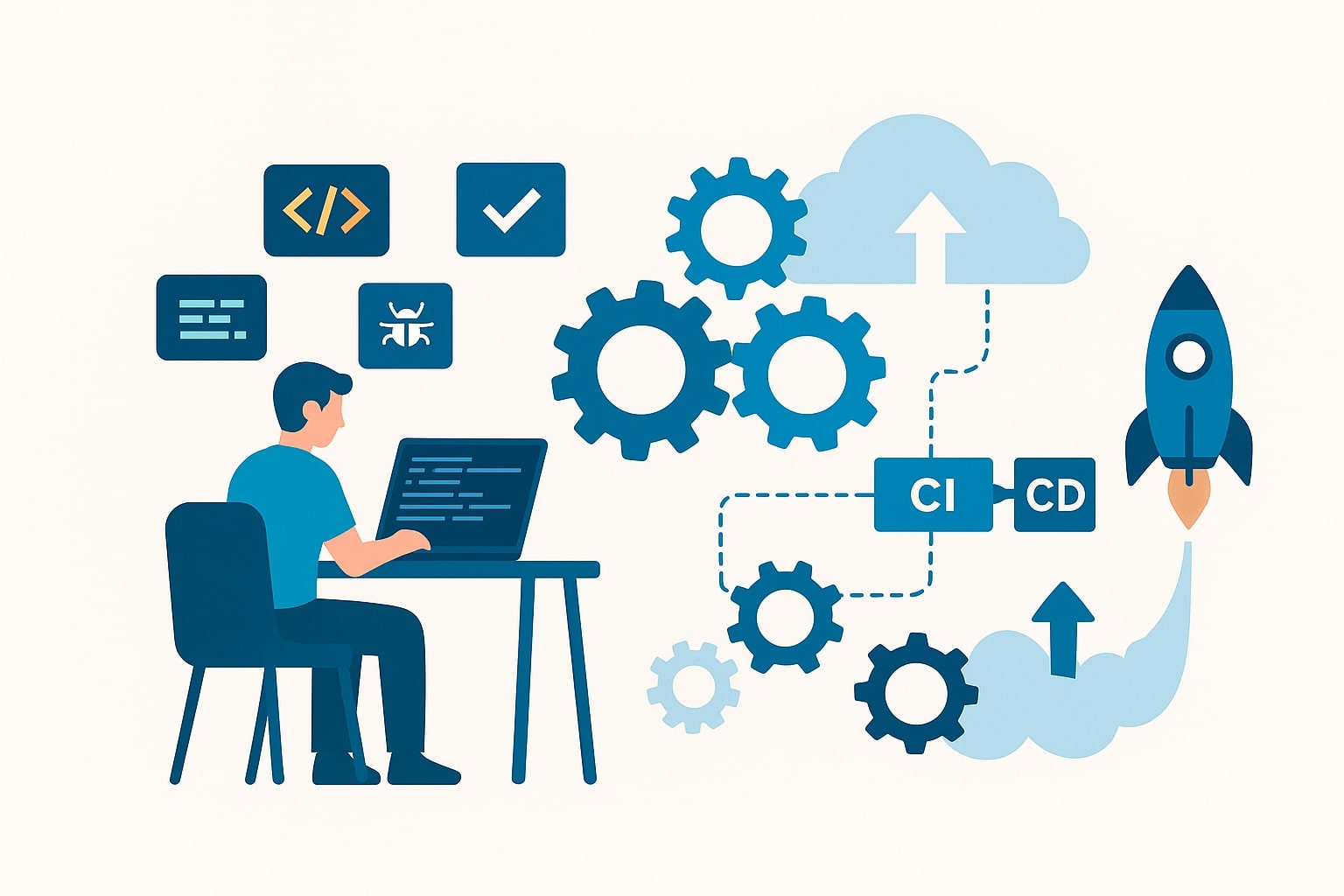
Where Automation Saves the Most Time
1. Automated Code Reviews
Automation tools scan code instantly and detect:
- Performance issues
- Security problems
- Duplicate logic
- Syntax errors
This eliminates hours of manual review and helps developers write cleaner, safer code from the start. Teams specializing in AI MVP Development use AI-assisted systems to speed this up even further.
2. Continuous Integration (CI)
CI integrates new code automatically, preventing conflicts between developers. It ensures:
- Fewer broken builds
- Faster updates
- Higher code compatibility
This keeps the MVP moving forward smoothly, without delays caused by manual merging.
3. Continuous Deployment (CD)
CD automates the deployment of new features to testing, staging, and production environments. This removes:
- Manual deployments
- Environment mismatches
- Human errors
CD is essential for fast SaaS MVP launches because SaaS apps require frequent updates and seamless deployment.
4. Automated Testing
Manual testing takes a long time and often misses bugs. Automated testing runs hundreds of checks within minutes:
- Unit tests
- Integration tests
- Browser tests
- Regression tests
Automation ensures your MVP stays stable throughout development.
5. Real-Time Monitoring
Monitoring tools track:
- Bugs
- Crashes
- API issues
- Speed problems
- Server errors
This gives instant feedback and prevents major failures.
How Automation Reduces MVP Development Costs
Time saved equals money saved. A typical manually developed MVP takes 12–16 weeks. Automation reduces this to 6–8 weeks. That time reduction directly lowers the total billable hours, testing hours, and development overhead.
Automation saves money because it:
- Reduces repetitive work
- Minimizes debugging time
- Prevents expensive late-stage bugs
- Shortens testing cycles
- Speeds up deployments
- Improves team efficiency
We’ve seen founders save $8,000–$15,000 on average. One fintech startup saved $12,000 by integrating automation early, cutting their timeline by 50%.
A Lean MVP Developer focuses on speed, efficiency, and eliminating waste — and automation is the foundation of this approach.
Automation Across All Stages of MVP Development
Automation isn’t just used during coding; it enhances every phase of the MVP journey.
1. Planning & Strategy
Automation helps create:
- User stories
- Roadmaps
- Feature priority lists
This makes planning clearer and faster.
2. UI/UX Design
Design tools automate:
- Reusable components
- Layout adjustments
- Multi-screen adaptation
This speeds up wireframing and prototyping.
3. Development
Developers use automated tools for:
- Code analysis
- Security scanning
- API validation
This keeps development fast and consistent.
4. Testing
Automated tests run throughout development. This ensures features work reliably across browsers, devices, and environments.
5. Deployment & Monitoring
Automation ensures:
- Zero-downtime deployment
- Easy rollback options
- Safe updates
- Continuous performance tracking
This is critical for SaaS and AI-driven startups that need to release updates quickly.
Why Startups Need Automation the Most
Startups operate under pressure — limited budget, limited people, and limited time. Automation creates a competitive advantage by:
- Speeding up releases
- Lowering costs
- Reducing technical risks
- Supporting faster iteration
- Helping founders validate ideas quickly
This is why founders choose teams with experience in MVP App Development, MVP Consultant strategy, and Startup MVP Specialist execution.
Automation gives startups the freedom to build fast, test fast, and pivot quickly.
Why Automation Is Essential for SaaS Founders
SaaS products evolve constantly. They need:
- Frequent releases
- Fast bug fixes
- Smooth deployment
- Real-time monitoring
Without automation, SaaS development becomes slow, expensive, and unstable. Automation ensures your SaaS MVP can grow without breaking.

Automation + AI = Next-Gen MVP Development
Automation is powerful. AI makes it even better.
AI tools help with:
- Code generation
- Bug prediction
- Smart testing
- Performance optimization
An AI MVP Development workflow accelerates everything — from coding to testing to deployment. This allows startups to build more sophisticated products with smaller teams and lower budgets.
Real Impact: What Founders Experience
Founders consistently report that automation transforms their MVP journey.
With Automation
- Faster releases
- Lower development cost
- Higher reliability
- Predictable timelines
- Better investor confidence
Without Automation
- Frequent delays
- Manual mistakes
- High developer cost
- Unreliable releases
- Slow go-to-market
Automation isn’t optional anymore — it’s the foundation of modern MVP development.
Conclusion: Build Faster. Spend Less. Launch Smarter.
Automation is the key to faster MVP development, lower costs, and stronger product stability. It gives founders speed, control, and clarity during the most crucial stage of their startup journey.
At KSoft, we integrate automation into every stage of development — planning, coding, testing, deployment, and monitoring. Our process is driven by the combined expertise of our MVP Development Services, MVP Developer, Lean MVP Developer, MVP Consultant, Startup MVP Specialist, MVP App Development, and MVP Software Developer teams.
If you want to launch your MVP faster, with better quality and predictable costs:
Book a demo at www.consultwithkrishna.com