
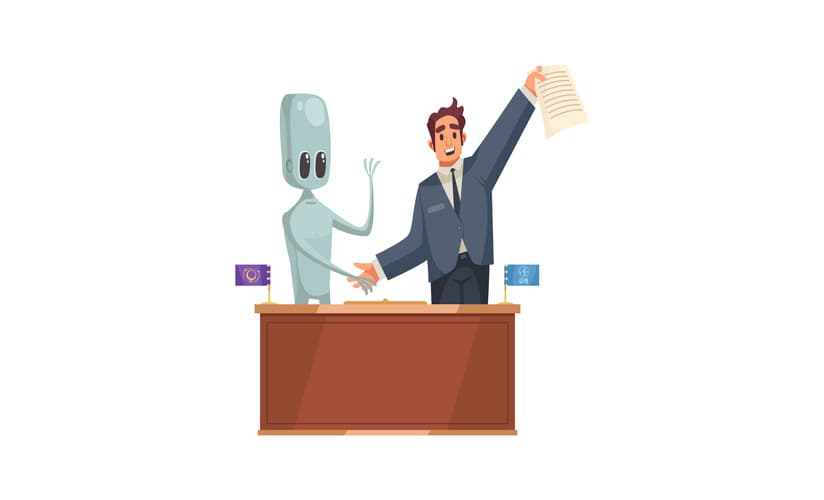
The Difference Between Probability and Judgment
Artificial Intelligence has become incredibly good at guessing.
It predicts what you’ll type next.
It suggests which product a user might buy.
It flags anomalies, optimizes routes, and even writes code.
But here’s the truth most hype ignores:
AI operates on probability. Engineers operate on judgment.
And that difference matters more than ever.
AI Works on Patterns, Not Understanding
At its core, AI doesn’t know things—it calculates likelihoods.
When an AI model generates an output, it isn’t saying “this is correct.”
It’s saying “based on past data, this seems most likely.”
That’s powerful.
But it’s also limited.
AI:
- Learns from historical data
- Optimizes for statistical accuracy
- Repeats patterns it has seen before
- Cannot understand intent, ethics, or real-world consequences
It guesses—very intelligently—but it still guesses.
Engineers Bring Context, Accountability, and Judgment
Engineers do something AI cannot:
They decide.
A human engineer considers:
- Business goals
- User impact
- Security risks
- Ethical boundaries
- Edge cases that data doesn’t capture
When an engineer approves a system, ships a feature, or overrides an AI suggestion, they are taking responsibility for the outcome.
AI can recommend.
Engineers are accountable.
And accountability can’t be automated.
Probability vs Judgment: A Real Example
Imagine an AI model suggests deploying a change because tests passed with a 98% success rate.
AI sees: High probability of success.
An engineer sees:
- A 2% failure could crash production
- A regulatory risk in one region
- A user flow that “feels” wrong despite passing metrics
The engineer pauses, adjusts, or rejects the change.
That pause?
That’s judgment.
Why This Distinction Matters in the AI Era
As AI tools become part of:
- Software development
- DevOps and cloud infrastructure
- Customer support
- Business decision-making
The risk isn’t AI replacing engineers.
The real risk is treating AI outputs as decisions instead of inputs.
Great teams don’t ask:
“What did the AI say?”
They ask:
“Do we agree with this—and why?”
The Best Teams Use AI as a Co-Pilot, Not a Captain
High-performing engineering teams:
- Use AI to accelerate thinking, not replace it
- Let models suggest—but humans decide
- Combine data-driven insights with experience
- Review, test, and question AI outputs
AI increases speed.
Judgment protects quality.
Final Thought
AI can guess the next best move.
But when systems fail, users complain, or businesses take a hit—
it’s not the algorithm that’s accountable.
It’s the engineer who decided to trust it.
And that’s why, in an AI-driven world, human judgment isn’t becoming less important.
It’s becoming the most valuable skill of all.
Planning to integrate AI into your software, cloud, or workflows?
Don’t just adopt AI—architect it wisely.
👉 Book a strategy call and build with confidence.