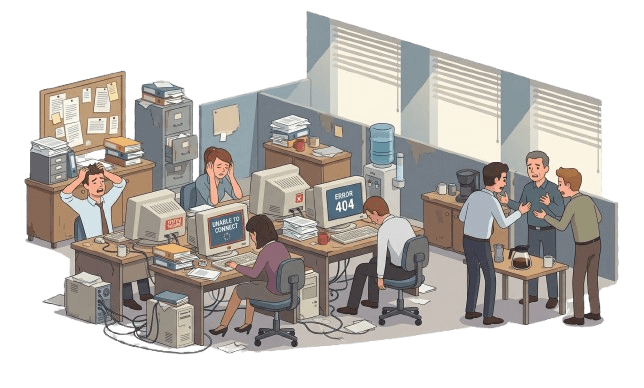
In 2026, nearly 70% of mid-sized US companies still rely on outdated systems, risking operational efficiency and security. As digital transformation accelerates, the urgency to modernize has never been clearer. Failing to adapt can cost businesses millions in lost productivity and increased vulnerabilities.
This article explores the implications of outdated systems, their impact on business operations, and the necessity for modernization. Understanding these dynamics is crucial for US businesses aiming to thrive in a competitive landscape.
Outdated Systems Slow Progress
Many companies are hindered by outdated systems that create bottlenecks in operations. These legacy systems often lead to inefficiencies, with studies revealing that organizations can lose up to 20% of productivity due to slow processes. This creates frustration among employees and hampers customer satisfaction.
To overcome these challenges, businesses are turning to integrated solutions that streamline operations. By modernizing their software, companies can automate repetitive tasks and improve data accessibility. This shift not only enhances efficiency but also reduces the risk of errors.
The result is a significant boost in productivity, with firms reporting efficiency improvements of over 30%. A mid-market company in the healthcare sector recently modernized its patient management system, leading to a 25% reduction in appointment scheduling errors.
Security Risks Are Increasing
Outdated systems are prime targets for cyberattacks, with 80% of breaches occurring due to unpatched software vulnerabilities. In 2026, companies that neglect to upgrade their security measures face dire consequences, including data loss and reputational damage.
Modernizing software not only strengthens security protocols but also ensures compliance with evolving regulations. For instance, integrating advanced encryption and multi-factor authentication can significantly reduce the risk of unauthorized access.
Businesses that prioritize security upgrades can decrease their risk exposure by up to 50%. A recent survey indicated that firms investing in modern security frameworks saw a dramatic decline in successful cyberattacks.
Customer Expectations Are Rising
As digital experiences become the norm, customers expect seamless interactions with businesses. Companies using outdated systems struggle to meet these expectations, often resulting in lost sales opportunities and decreased customer loyalty.
Modern solutions offer enhanced user experiences through personalized interactions and faster service. By leveraging data analytics and customer relationship management tools, businesses can tailor their offerings to meet specific customer needs.
Companies that have modernized their customer engagement platforms report a 40% increase in customer satisfaction ratings. This translates into higher retention rates and increased revenue from repeat business.
Integration Enhances Collaboration
Siloed legacy systems hinder collaboration among teams, leading to miscommunication and inefficiencies. In 2026, integrated platforms are essential for fostering a collaborative work environment, allowing teams to share information easily.
Modern tools facilitate real-time communication and project management, breaking down barriers between departments. This integration empowers employees to work together more effectively, enhancing overall productivity.
Organizations that adopt collaborative platforms have seen a 35% improvement in team performance. A manufacturing firm reported that after integrating its systems, project completion times decreased by 20%.
Cost Efficiency Through Modernization
Maintaining outdated systems incurs high operational costs, from frequent repairs to increased downtime. In 2026, businesses that cling to these systems often face escalating expenses that threaten their bottom line.
Transitioning to modern solutions can significantly reduce these costs through improved resource management. Cloud-based services, for example, offer scalability that traditional systems cannot match, allowing companies to pay only for what they use.
Firms that have made the switch report a cost reduction of up to 30%. A retail company found that by moving to a cloud platform, it saved over $100,000 annually in IT maintenance costs.
Embracing Innovation and Agility
In a rapidly changing market, agility is crucial for survival. Companies tethered to outdated systems struggle to pivot quickly in response to market demands, risking their competitiveness.
Modern software solutions foster innovation by enabling rapid development and deployment of new features. This flexibility allows businesses to adapt their offerings and strategies in real-time, responding effectively to customer feedback.
Organizations that embrace agile practices have reported a 50% faster time-to-market for new products. A tech company recently launched a new service in just three months, thanks to its modernized development environment.
Why Businesses Must Adapt Now
The need for modernization is no longer optional; it's a necessity for survival. Companies that fail to adapt risk being outpaced by competitors who leverage advanced technologies.
With the increasing reliance on digital solutions, staying ahead means investing in modern systems that support growth and innovation. The time to act is now, as every day spent on outdated systems is a missed opportunity.
By prioritizing modernization, businesses position themselves for long-term success, ensuring they can meet future challenges head-on. The urgency to evolve is palpable, and the rewards for those who do are substantial.
Frequently Asked Questions
What exactly is this and how does it work?
Legacy software refers to outdated systems that no longer serve current business needs. For example, a company using an old ERP system may struggle with data integration.
How is this changing businesses in 2026?
In 2026, businesses that modernize their systems can improve operational efficiency by up to 30%, leading to better service delivery and customer satisfaction.
What are the biggest benefits for mid-market companies?
Mid-market companies can achieve significant cost savings, improved security, and enhanced collaboration by upgrading their outdated systems.
What are the main challenges when adopting this?
Challenges include initial costs and employee resistance. However, clear communication and proper training can help mitigate these issues.
How do I know if my business is ready?
Indicators include frequent system failures, slow processes, and customer complaints. If these are prevalent, it's time to consider modernization.
Conclusion
In summary, modernizing outdated systems is crucial for businesses aiming to thrive in today's digital landscape. The benefits are clear: improved efficiency, security, and customer satisfaction.
Leading US businesses are currently investing in integrated solutions, leveraging cloud technologies, and prioritizing security to stay competitive. They recognize that modernization is key to long-term success.
The time to act is now; businesses that hesitate risk falling behind. Embrace modernization to unlock new opportunities and secure your future.
Take the Next Step in 2026
Connect with us to explore how modernization can transform your business. We're here to help you navigate this critical journey with tailored solutions and expert guidance.